Skip to main content

Meet The Meetings Show’s conference futurist
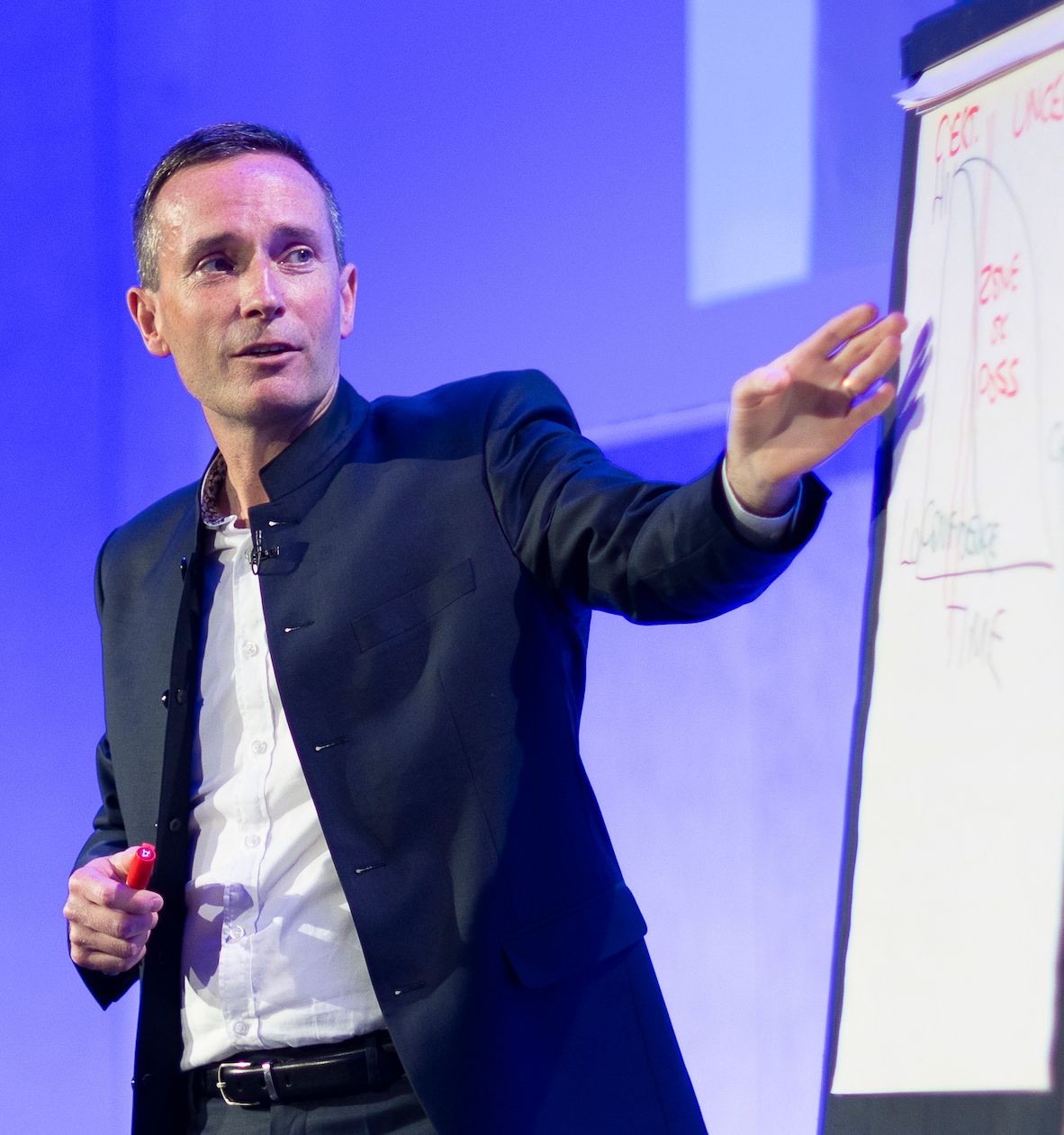
The Meetings Show this year is taking a bold step into the future by appointing its very own Conference Futurist, Dr Graham Norris. In this interview, we find out from Dr Norris how he’s collaborating with the show, why event professionals are natural futurists and how we can think more creatively about the future of the industry.
What is a futurist?
A futurist helps people think more clearly about change, uncertainty and possibility, so they can make better decisions today. It’s really a study of change, how the world will be different and what we want from the future. For event professionals, that means asking how people will gather, learn, network, buy, belong and make decisions in the years ahead.
The problem is that it’s easy to become distracted or demoralised by the uncertainty that change causes. So, my work as a futurist speaker is to help audiences step back from immediate pressures, make sense of change and leave with sharper questions, clearer choices and more confidence about the future.
Tell us a little more about your role at the show this year
The Meetings Show is a fantastic event, and in my role as Conference Futurist I’m looking forward to further raising its reputation as the premier conference where event professionals can stay ahead of the curve in creating amazing experiences for their audiences.
As well as helping with promotion ahead of the show, I’ll be conducting a live research workshop for hosted buyers on Tuesday and then hosting a panel on Wednesday talking about the top-line results of the workshop. I’ll also be publishing the results in more depth following The Meetings Show, including a report, social media content and audio-visual material.
The aim is to engage as many of those attending as possible in imagining the future of the industry, so they can generate their own powerful insights that can inform their decision-making.
What’s the biggest misconception people tend to have about futurism?
There are two common attitudes I come across that I think limit our ability to think confidently and creatively about the future. One is that we have all the answers already. Some people believe that with advanced analytics and artificial intelligence, we can predict everything we need to. And sure, with data we can now create very useful predictive models that give us increasingly powerful insights into what will happen. Weather forecasting is perhaps the best example of this. Yet, the most important decisions we make are either outside these models or extend deeper into the future. Ever since strategic planning became a discipline in the 1950s, the belief has been “we just need a bit more data, and then we can have perfect models.” It is no truer now than it was then.
The other attitude I come across is that there is nothing you can do about the future, so there’s no point thinking about it. While there are many aspects of life that are largely outside of our control, we should be focusing on expanding our influence over the future rather than handing that power over to fate. We are a product of our decisions in the past, and our future will be determined by the decisions we make starting today.
In both cases the result is we take a passive approach, when what we really need is to lean into the uncertainties and form opinions about the future we want.
Why, in your opinion, is imagination so powerful?
We are limited by our current thinking, whereas we can become liberated by future thinking. In the future, anything is possible, so by applying our imaginations we can truly innovate, cultivate our creativity and really move the needle.
For example, can you imagine a future where your conference badge redesigns your day as the event unfolds, your most valuable meetings happen with people you did not know existed that morning and every session changes shape in real time based on what the room is curious, confused or energised by?
The first step toward realising these possibilities is by imagining them.
When relying on imagination, how can we trust that what we identify is accurate and possible?
This is another misconception about the future. The point is not to try to erase uncertainty by predicting the future with perfect accuracy. The point is to explore plausible possibilities carefully enough that we can make better decisions now.
When it comes to deciding what we want the from future, I rarely see a problem in people imagining things that aren’t possible. Quite the opposite. We usually play it very safe.
This is why I enjoy what I do so much. Because it’s about helping people ask “what if”, letting them dream and worrying about the how later. We spend so much of our time in execution mode, it’s often only at conferences such as The Meetings Show that we get a chance to look up and think about what’s coming.
What advice would you have for attendees to ensure they get the most out of your session?
At the start of a session, people are often still caught up in emails, notifications and short-term pressures. My aim is to help them lift their eyes and reconnect with the bigger questions shaping their work.
Participants can therefore have a truly transformational experience when they bring a sense of curiosity and the spirit of experimentation with them. Sometimes it takes a little while to warm up people’s imaginations, but once they open their minds to the possibilities, that’s when the ideas flow.
How can event professionals balance long-term future thinking with the day-to-day realities of running events now?
Event professionals are natural futurists. Every event begins as an imagined future: how people will arrive, move, meet, learn, feel and leave changed in some way. The challenge is to apply that same imagination not just to the next event, but to the next decade of the industry.
What insights are you hoping the industry will take away from your white paper?
I hope it gives the industry a useful snapshot of how event professionals themselves see the future: where they see opportunity, where they feel uncertainty and what possibilities they believe are worth exploring. Rather than being a report about the industry from the outside, it will be a collective intelligence exercise from people actively shaping it.
Are there any assumptions the events industry currently holds that you think may be challenged over the next decade?
A common assumption I see everywhere is that people’s attention spans are shortening. This doesn’t make sense to me. People still read books and binge-watch TV series. If it’s interesting, people can focus for long periods of time. Yes, we have become somewhat addicted to our phones and allergic to boredom, but a great experience is still a great experience.
What’s one trend or shift the industry may be underestimating right now?
One of the biggest trends I see in its early stages is personalisation. For most of the past several decades, the emphasis has been on mass production and commoditisation. Yes, you can personalise your phone a little bit, set your computer to dark mode, and so on. But I think going forward technology will allow for far greater personalisation. Your phone will be made and set up specifically for you, the medicine you take is designed just for you, and the event you experience will be tailored specifically to meet your expectations. Achieving this will create other problems, but I see this trend has a long way to run.
What makes the meetings and events industry particularly interesting to explore from a futurist perspective?
How to bring people together to create a collective experience is really a special skill. The meetings and events industry has evolved massively in response to numerous economic, social, environmental and technological trends. Going forward, technology in particular will enable us to bring people together in new and ingenious ways. At the same time, social trends will shift expectations about the experiences people want. Industries operating at the intersection of several, often conflicting, trends are the most interesting.