



You don't have to be 'on' all the time
Helen Moon, Founder and CEO of EventWell, explores why managing your energy is just as important as managing your time at events, and why giving yourself permission to pause can help you stay focused, engaged and get more from the experience.
Trade shows can be exhilarating. They bring together ideas, opportunities, innovation, and people from across the industry, but they can also be exhausting.
For many attendees, exhibitors, speakers, and event professionals, a trade show can feel like a performance. There is an unspoken pressure to constantly network, attend every session, visit every stand, reply to every message, and make every conversation count. The result? By lunchtime, many people are already running on empty.
The truth is that the best performances do not come from pushing through exhaustion;'they come from managing your energy, not just your time.
As we mark Event Wellbeing Week, this is an important reminder. Looking after your wellbeing at an event is not a luxury; it is a strategy for getting the most from the experience, and giving yourself permission to pause can help you stay focused, engaged, and productive throughout the day.
Simple actions can make a significant difference:
-
Schedule short breaks between meetings.
-
Step away from the exhibition floor for ten minutes.
-
Stay hydrated.
-
Eat regularly (no more than 4 hours without eating).
-
And be realistic about how many sessions or networking opportunities you can comfortably fit into your day.
Most importantly, remember that it is perfectly acceptable to take time out when you need it.
This is especially important for neurodivergent attendees, disabled attendees, and anyone who may find busy event environments overwhelming. Crowds, noise, constant social interaction, and navigating large venues can quickly lead to sensory overload and fatigue. However, these challenges are not exclusive to neurodivergent people; after several hours in a busy exhibition hall, many attendees benefit from a quieter space to recharge.
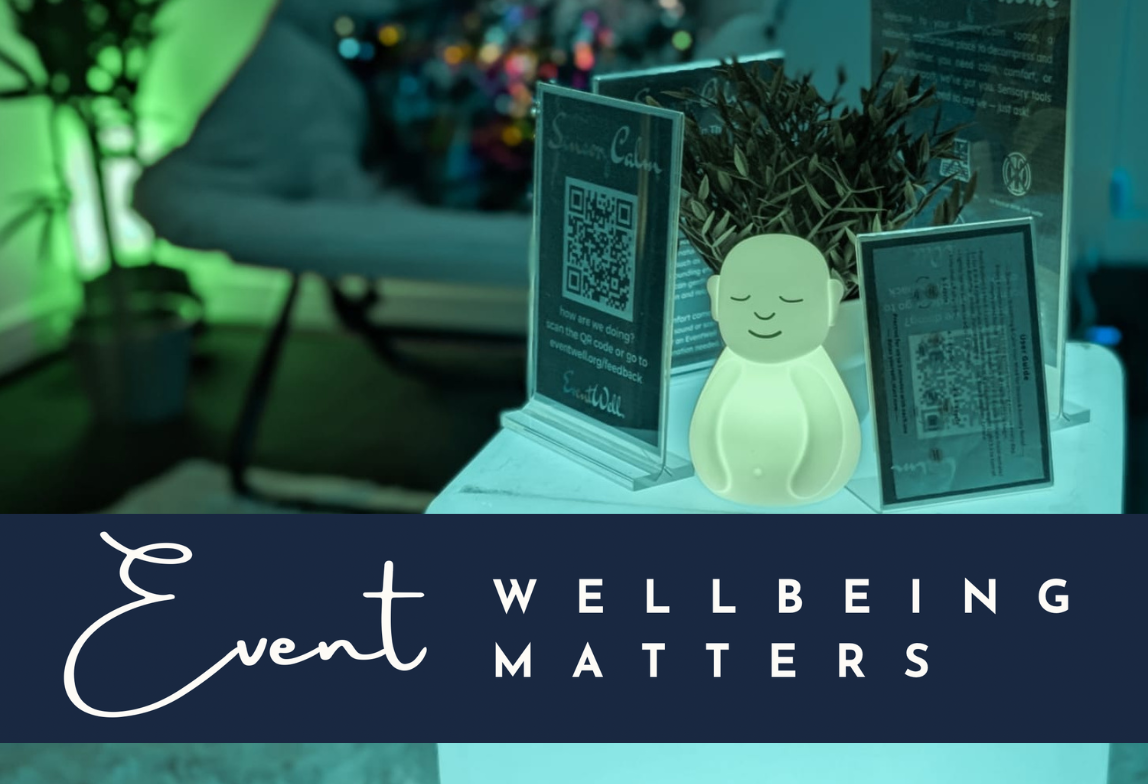
That is why more organisers are introducing wellbeing-focused initiatives, such as dedicated (and supervised)'quiet rooms'and'sensory spaces, wellbeing sessions, and accessibility support services. These spaces provide attendees with somewhere calm to reset, regulate, decompress, or simply enjoy a few moments away from the intensity of the show floor.
The Meetings Show, taking place during Event Wellbeing Week, is one example of how the industry is embracing a more inclusive and wellbeing-focused approach. By recognising that attendees have different needs and energy levels, organisers can create environments where everyone has the opportunity to participate and thrive.
You do not need to be 'on' all the time to get value from an event, in fact, sometimes the most productive thing you can do is'pause, because when'we take care of our wellbeing, we do not just survive events, we experience them at our best.